
Tuscola County Arrest Records and Court Charges
An arrest record is the account of a person being taken into custody. It typically notes who made the arrest, when it happened, and the reason. That record starts on the law-enforcement side, with the sheriff or a local police department, and continues at the jail during booking. Arrest records are not a court file on their own. The booking and custody side, including the jail roster, is covered on the Tuscola County inmate records page.
The court charge record is a different file. After an arrest, the Tuscola County Prosecuting Attorney reviews the police reports and decides the formal charges. Those court charges after arrest are filed with the court and tracked through the case. An arrest does not lock in the charges. The prosecutor can file more, fewer, or different counts than the arrest suggested. The full case file and the final outcome live on the criminal court records page.
How to Find Tuscola County Arrest Records
Charges and their status show up in the court case file, not in a separate arrest database. Michigan's free MiCOURT Case Search is the main online starting point, and the 71B District Court also posts a public daily docket. Arrest and booking detail, by contrast, sits with the jail and the sheriff.
- Open MiCOURT Case Search and choose the Tuscola County court that holds the case.
- Search by the defendant's name, or enter the case number or CTN if it is known.
- Open the case to read the full charge list.
- Check each charge's statute code, level, and current status.
When a name search returns nothing, the arrest may be very recent or the file may not be online yet. A call to the 71B District Court or the 54th Circuit Court records clerk confirms whether charges have been filed and what they are.
How Tuscola County Charges Get Filed
The charge record begins when the prosecutor files a charging document. The arrest itself does not create the charges. Three main documents can start a criminal case, and the one used depends on the level of the offense and how it reaches the court.
| Complaint | Information | Indictment | |
|---|---|---|---|
| Filed By | Officer or Prosecutor | Prosecutor | Grand Jury |
| Common For | Misdemeanors | Most felonies | Serious felonies |
| Starts the Case | Yes | Yes, after bindover | Yes |
An arrest for a felony does not go straight to the higher court. The case first passes through the district court for a probable-cause conference and, if needed, a preliminary exam. Only after a judge finds enough proof does the felony information get filed in circuit court. Most Michigan cases run on a complaint and information rather than a grand jury indictment.
Who Files Tuscola County Charges
The Tuscola County Prosecuting Attorney, not the police, decides the court charges. Officers make the arrest and write the reports. The prosecutor's office then screens each case, weighs the proof, and authorizes the counts that get filed. Erica Walle serves as the current Prosecuting Attorney for the county.
The office stays involved through the whole case. It appears at arraignments, preliminary exams, and trials, and it can amend charges as the evidence develops. Contact details are posted on the Tuscola County Prosecuting Attorney page. Each filed charge carries a case number, and a criminal matter also carries a CTN, a criminal tracking number that links the record across systems.
The prosecutor's reach extends into the county's specialty courts too. In the Tuscola Mental Health Court, the office provides a prosecutor, reviews cases that need approval, and helps decide legal eligibility. A victim rights coordinator on staff keeps victims informed as charges move. These roles can shape how a charge is handled, whether through standard prosecution or a problem-solving court track.
Tuscola County Charge Status
Charges rarely stay frozen. As a case moves, the prosecutor or the court may change them. A charge can be amended to a different offense, reduced to a lesser one, added, or dropped. The status line in the record shows the current state of each count.
| Status | What It Means |
|---|---|
| Pending | The charge is filed and the case is still open. |
| Amended / Reduced | The charge was changed to a different or lesser offense. |
| Dismissed | The court dropped the charge, ending it without a conviction. |
| Nolle Prosequi | The prosecutor formally chose not to pursue the charge. |
For example, a case can open with a felony count that the prosecutor later reduces to a misdemeanor as part of a plea. The record then shows both the original charge and the reduced one, so the full history stays readable.
Note: A dropped or dismissed charge still appears in the court file unless a judge later sets the record aside under state law.
What a Tuscola County Charge Record Shows
A charge record packs several details into a few lines. Each field helps a reader tell one count from another and track how it changed. The fields below are the ones a searcher will see most often.
- Case Number
- The court's unique ID for the case, used to pull the full file.
- CTN
- The criminal tracking number that links a criminal matter across court and police systems.
- Charge
- The offense as filed, with the statute the prosecutor cites.
- Level
- Whether the count is a felony, a misdemeanor, or a civil infraction.
- Status
- The current state of the count, such as pending, amended, or dismissed.
- Disposition
- The final result once the case ends, from conviction to dismissal.
The 71B District Court's public docket display shows the case number and CTN for criminal matters, which makes it a quick way to confirm a charge is on file.
Tuscola County Charge Codes and Levels
Every charge ties back to a specific statute. The code on the record points to the exact law the prosecutor says was broken. Michigan sorts offenses into levels. Felonies are the most serious and can bring more than a year in prison. Misdemeanors are lower-level crimes with lighter penalties. Civil infractions, such as most traffic tickets, are not crimes at all and carry fines rather than jail.
One arrest can spark several separate charges. Each count is listed on its own, with its own code, level, and status, so a single case can mix felony and misdemeanor counts.
In Tuscola County, the 71B District Court handles misdemeanor charges and payable misdemeanors, while felony charges move to the 54th Circuit Court after a district judge binds the case over. A payable misdemeanor or civil infraction can often be resolved by paying the set amount before the due date, but a criminal charge cannot simply be paid away.
Charge vs. Conviction
A charge is an accusation. A conviction is a finding of guilt. The two often differ, because charges get reduced, dismissed, or beaten at trial. A record that lists a serious charge may end in a much lighter conviction, or in none at all. The disposition, not the charge, tells the real result.
| Charge | Conviction | |
|---|---|---|
| Stage | Accusation | Verdict or plea |
| Burden of Proof | Probable cause | Beyond a reasonable doubt |
| Public Record | Yes | Yes |
Statewide Charge Lookups and ICHAT
Local charges also feed a statewide record. The Michigan State Police runs ICHAT, the Internet Criminal History Access Tool, which returns a person's statewide criminal history for a fee. It is name based and open to the public online through the Michigan State Police criminal history page.
ICHAT does not cover every record. It leaves out:
- Warrant information.
- Traffic records.
- Juvenile records.
- Local misdemeanors kept only at the district court.
- Federal and tribal records.
- Suppressed records.
For those, the court that holds the file is the better source. A charge that never rolled up to the state system may still sit in a Tuscola County court record.
Appointed Counsel After Charges
An arrest and new charges often mean a person needs a lawyer fast. Anyone who cannot afford one has a right to appointed counsel. In Tuscola County, a request for a court-appointed attorney at arraignment goes through the Michigan Indigent Defense Commission, or MIDC. The 71B District Court directs anyone who needs a lawyer for arraignment to contact MIDC at 989-672-3799.
The commission's role and services are described on the Michigan Indigent Defense Commission site.
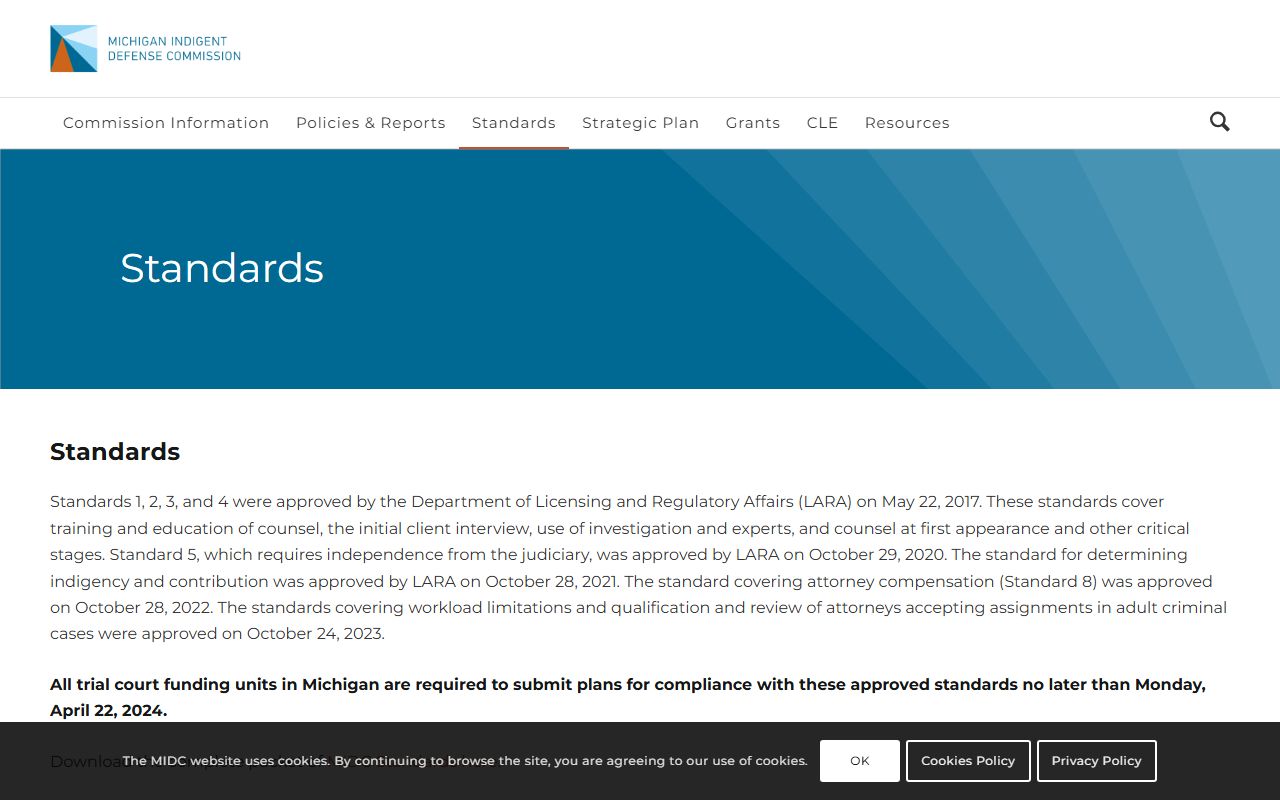
Appointed counsel steps in early, often before a charge is even amended, so the evidence and the options get reviewed from the start. MIDC also sets the standards that appointed lawyers must meet. Those rules cover training, time, and the resources a defense needs to be effective.
The specific rules appear on the MIDC standards page.
Strong defense work can shape whether a charge is reduced, dismissed, or taken all the way to trial.
Background Check Considerations
Formal background checks follow federal law. When an employer, landlord, or licensing board pulls a report, it must come from a screening company that follows the Fair Credit Reporting Act. A quick court-portal search works for personal knowledge, but it is not an FCRA report.
Important: This site is not a consumer reporting agency under the FCRA, and its information cannot be used for credit, employment, tenant, insurance, or other regulated decisions.
Restricted Tuscola County Charge Records
Not every charge is open to the public. Juvenile charges are the main exception. Under MCL 712A.28, juvenile court records open only by court order. Sealed cases and convictions set aside under the state's Clean Slate law also drop out of public search.
Some details stay hidden even in open cases. A confidential victim address, a sealed document, or an active investigation may be withheld. Dismissed charges usually remain visible unless a court later sets the record aside.