
How to Search Tuscola County Court Records
The main online tool is MiCOURT Case Search, Michigan's free statewide case lookup. It may show civil, traffic, criminal, domestic, and probate cases, and what appears depends on the court that entered the case. Because the county does not run one combined records portal, the smart move is to match the case to its court before you type a name.
Three trial courts split the work. The 54th Circuit Court hears felonies, civil suits over $25,000, family matters, and any case not assigned elsewhere. The 71B District Court handles misdemeanors, traffic tickets, civil infractions, landlord-tenant disputes, small claims, and civil cases up to $25,000. The Probate Court covers estates, trusts, guardianships, conservatorships, mental health matters, and the safekeeping of wills. Have the party name or case number ready before you begin.
The online portal is only one channel. A file may not be digitized, or a record may sit outside the court system entirely. For those, the fallback chain is the clerk or court counter for case files, a phone call to the records line for status, and a Freedom of Information Act request for sheriff, jail, and administrative records. State criminal-history data comes from a separate Michigan State Police system, not from the case portal. Matching the right channel to the record you want prevents dead ends.
- Start with the case type. Felony, high-value civil, or divorce and family cases belong to the 54th Circuit Court and County Clerk. Misdemeanors, traffic, small claims, and civil under $25,000 belong to the 71B District Court. Estates, guardianships, and wills belong to the Probate Court.
- Open MiCOURT Case Search and enter a party name or a case number. The portal is the statewide entry point, and Tuscola court pages link to it for public case and docket lookups.
- For a hearing calendar rather than a full file, use the court display docket for the 71B District Court, which lists party name, time, hearing information, case number, and CTN.
- If the file does not appear online, call or visit the right office. The circuit and family records clerk answers at 989-672-3775, and probate records and scheduling run through 989-672-3850.
- For certified copies or older, non-digitized files, use the clerk or court counter in person. Official sources do not promise that every historical Tuscola file is online.
Tuscola County Court Records Search Fields
MiCOURT Case Search runs as a dynamic application, so the exact labels can shift with the current interface. The core fields stay consistent. You pick a court, choose whether to search by name or case number, and then narrow the result with the inputs below. A date of birth helps separate people with the same name in criminal and traffic files.
| Field Label | Type | Required | Notes / Format |
|---|---|---|---|
| Court | Dropdown / selector | Yes | Select the court or county; availability varies by court. |
| Search By | Tabs / radio | Yes | Name or case number are the common modes. |
| Last Name / Business Name | Text | Conditional | Used for party-name searches. |
| First Name | Text | Optional | Narrows a person-name search. |
| Date of Birth | Date | Optional | Distinguishes criminal or traffic parties where available. |
| Case Number | Text | Conditional | Used when searching by case number. |
| Case Type | Dropdown / filter | Optional | Civil, traffic, criminal, domestic, or probate by court. |
| Filing Date / Range | Date fields | Optional | Narrows results where offered. |
Types of Tuscola County Court Records
Record type follows court jurisdiction. The 54th Circuit Court produces felony criminal files and civil files over $25,000, plus family-division matters whose records route to the County Clerk. The 71B District Court produces misdemeanor, traffic, civil infraction, landlord-tenant, small claims, and lower-value civil files. The Probate Court produces estate, trust, guardianship, conservatorship, and mental health files. Each court keeps its own case documents, so the record you want lives with the court that entered it.
Some record groups carry special rules. Small claims cases stay under $7,000, are argued without attorneys, and allow no jury. Landlord-tenant summary proceedings move quickly and produce judgments of possession and writs. Circuit civil money-damages cases can pass through case evaluation, where a three-attorney panel reviews the matter and the parties have 28 days to accept or reject. Family-division matters are attached to the circuit structure, yet records questions for them route to the County Clerk rather than to a separate family clerk.
The daily hearing calendar for the district court is available as a public docket display, which is useful for confirming a hearing date without pulling the full file. For a deeper look at that calendar, the Tuscola County court dockets page walks through the display column by column.
- Civil records: complaints, answers, motions, judgments, and orders in money and property disputes.
- Small claims records: Affidavit and Claim filings for disputes under $7,000, heard without attorneys.
- Criminal records: complaint, warrant, bond, plea, verdict, sentence, and probation terms.
- Traffic and civil infraction records: citation number, violation date, fine, plea, and paid or dismissed status.
- Family and divorce records: complaint, custody and support filings, and the judgment of divorce.
- Probate records: petitions, letters of authority, inventories, accountings, and closing orders.
What Tuscola County Court Records Show
A court record is more than a name and a date. It ties together the court, the parties, the charges or claims, and every event the judge entered. The fields below reflect what a Tuscola researcher can expect from the public case portal and the district court display, though the deepest detail sits in the paper or electronic file at the court counter.
Michigan trial courts follow statewide records rules that shape both what is captured and what is shown to the public. The Michigan Courts records-management page explains how trial-court files are kept and released.
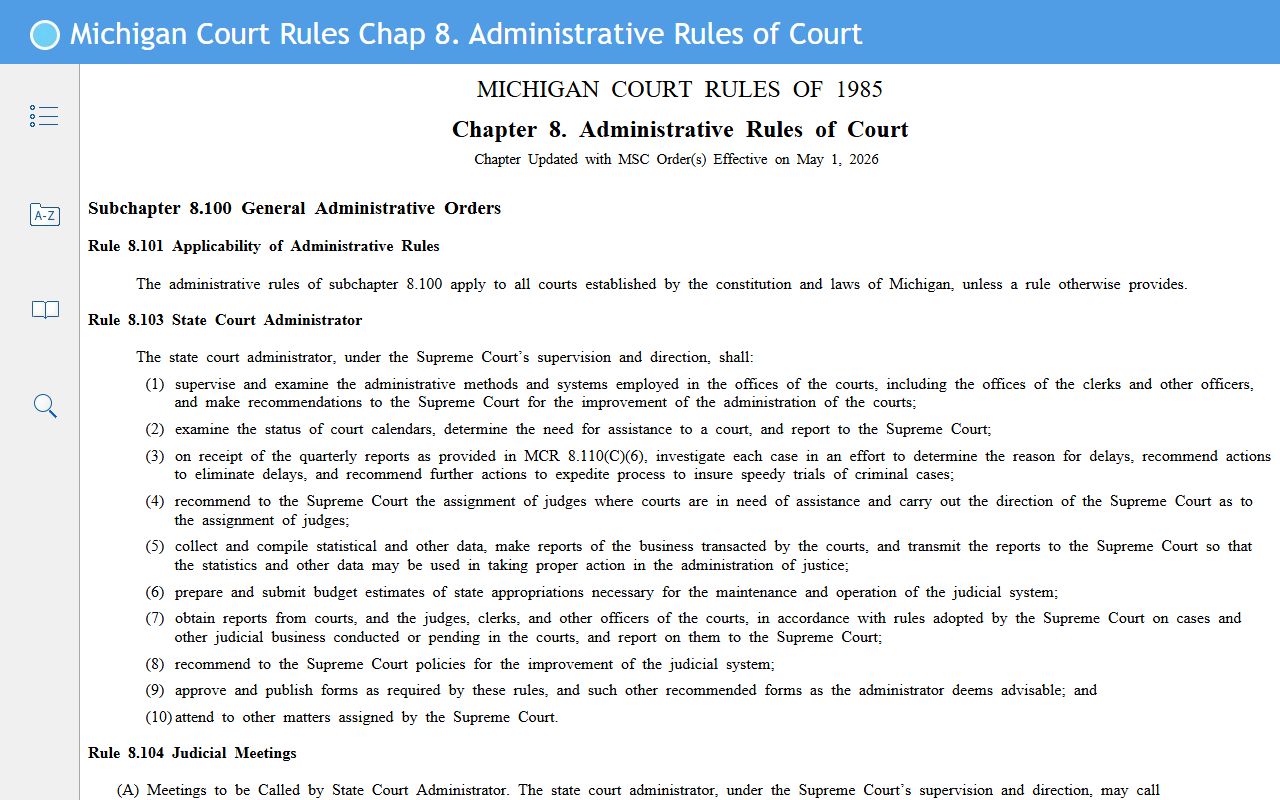
That guidance is why a public search may show case events and parties but not every scanned document, and why personal identifiers are stripped from public views. The field map below shows the pieces you can usually confirm online.
| Field | What It Shows |
|---|---|
| Court Name | 54th Circuit, 71B District, Probate, or Family Division. |
| Case Number | The court's file identifier; format varies by court. |
| CTN | Criminal tracking number for applicable criminal matters. |
| Party Name | Plaintiff, defendant, petitioner, respondent, or interested party. |
| Filing / Hearing Date | When the case opened and when events are set. |
| Hearing Info | Arraignment, preliminary exam, sentencing, review, or civil hearing. |
| Status / Disposition | Open, closed, dismissed, pleaded, sentenced, or set aside. |
| Financial Section | Fines, costs, restitution, bond, and payment arrangements. |
Public Access to Tuscola County Court Records
Michigan treats government information as open by default. The Freedom of Information Act opens with a policy that people are entitled to information about their government so they can take part in it, stated at MCL 15.231. The full framework for requests, responses, exemptions, and fees lives in the FOIA, Public Act 442 of 1976.
Court files follow a separate track. They are maintained by court clerks and released under court rule, chiefly MCR 8.119, along with statutes and any sealing order a judge enters. For circuit and family files, the County Clerk is the practical contact. District and probate files run through their own court offices. Plain-language help on state records access is available from the Michigan Attorney General FOIA page.
Most anyone can look at open court records, and no reason is required to view a public file. Fees apply for copies and for certified copies, which carry a court seal and are the versions accepted in legal proceedings. A county FOIA request goes to the Controller's Office and cites Public Act 442 of 1976. Requesters describe the record with dates, names, and file numbers, and the public body has a set window to respond. Photo identification may be needed for certified copies and for restricted vital records held by the clerk.
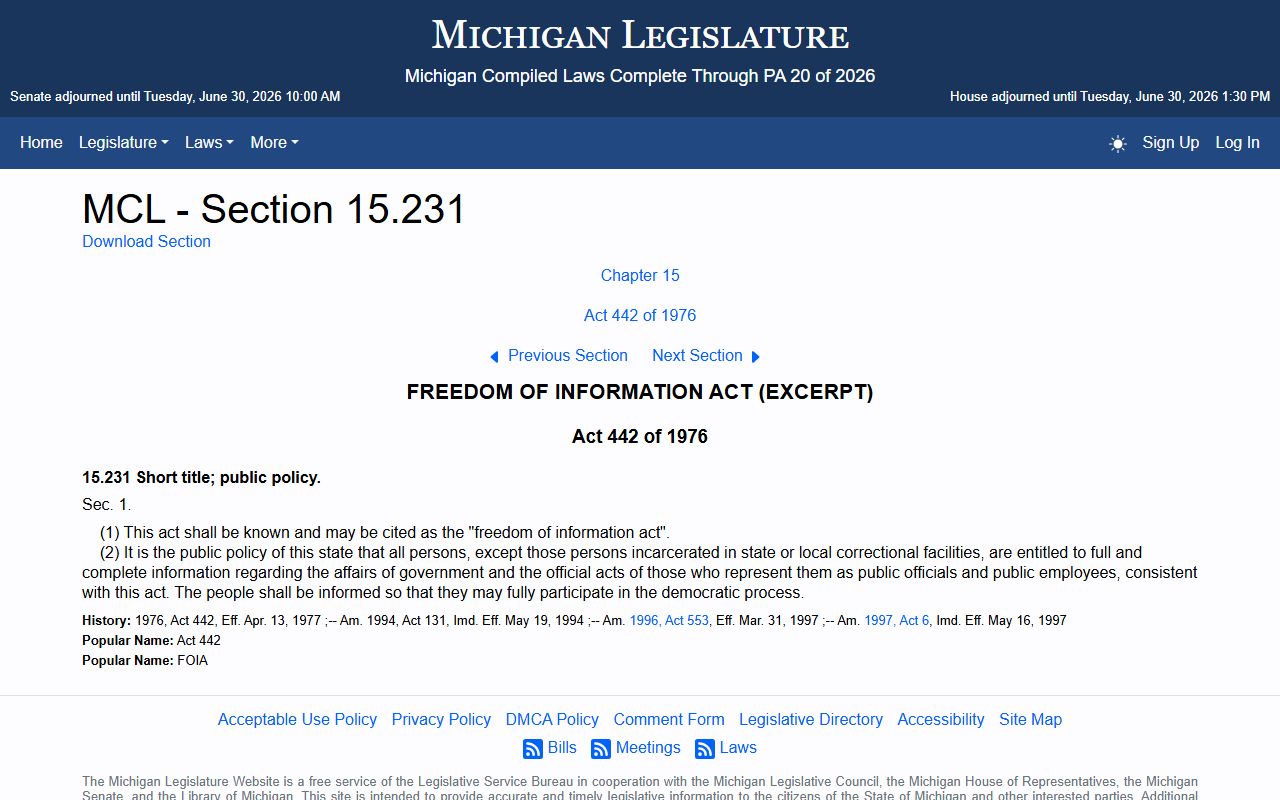
The policy above is the legal backbone for pulling most court and county records in Tuscola County, subject to the redactions and sealed categories that follow.
Note: Court records and criminal-history records differ; MiCOURT shows court cases, while state criminal-history checks come from a separate Michigan State Police system.
Records Sealed or Confidential in Tuscola County
Not every file is open. Juvenile records are the clearest example. Under MCL 712A.28, juvenile court records are open only by court order, and the county keeps a separate juvenile records line at 989-672-3783. Adoption records are also controlled; the County Clerk runs a petition process for adult adoptees and adoptive parents rather than an open counter search.
Other categories stay limited by rule or statute. Wills held for safekeeping, confidential case inventories in divorce files, mental health proceedings, and certain victim information are treated as nonpublic on Michigan's court-records chart. Convictions that have been set aside under MCL 780.621 can drop out of public view, and traffic-related limits fall under MCL 780.621c. District court filings also cannot contain dates of birth, Social Security numbers, driver license numbers, or financial account numbers.
To see a sealed or restricted file, a person usually must show a legal right to it or ask the court that entered the order. The court that holds the judgment can explain what is needed and whether a motion is required.
In-Person Tuscola County Record Requests
When a file is not online, the fastest route is often the courthouse counter in Caro. All three trial courts and the County Clerk work from the same building, so a walk-in visit can cover circuit, family, district, and probate requests in one trip. Bring the case number if you have it, valid identification, and payment for any certified copies. Michigan Courts materials note that certain personal identifiers are excluded from filings, so staff may redact copies before release.
Records that sit outside the court file, such as sheriff incident reports or jail records, move through a Freedom of Information Act request instead. The county FOIA form goes to the Controller's Office, while the Sheriff's Office runs its own FOIA form for law-enforcement records. Circuit and family record requests, by contrast, go directly to the Tuscola County Clerk, and the clerk records page covers fees and request steps in detail.
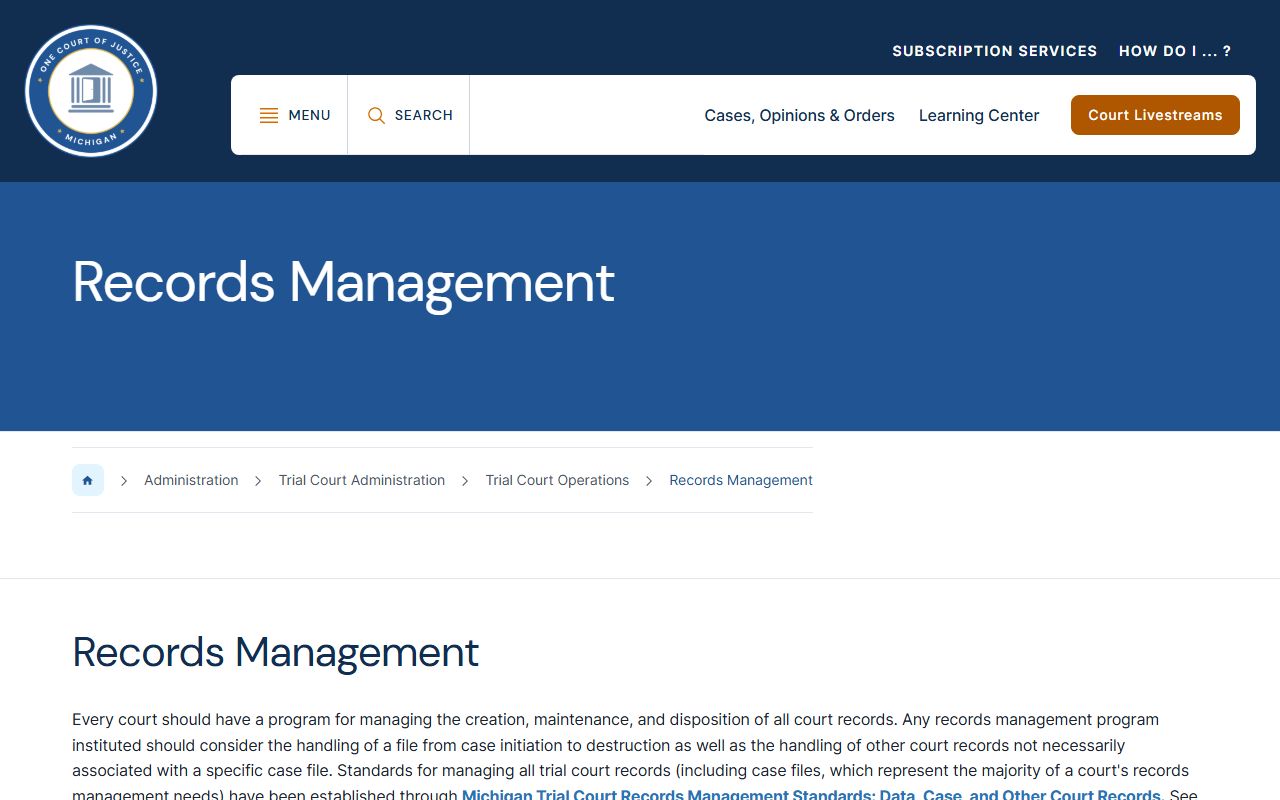
The state records-management framework shown above is the same standard the Caro counter applies when it pulls and copies a file for the public.
Tuscola County Clerk / Circuit and Family Records
440 N State St
Caro, MI 48723
989-672-3775
Mon-Fri 8:00 a.m. to noon, 1:00 to 4:30 p.m.